Blog Archives

September 18, 2020

Post COVID: Preparing your recycling facility for infectious diseases and illnesses

Tom Stanek

metal-recycling-post-covid

COVID-19 has highlighted industrial sanitation issues often difficult to address in recycling facilities. How a recycling facility responds to an infectious outbreak depends on the severity and type, as well as orders from the state and/or local government.

In response to COVID-19, for example, some cities in Massachusetts stipulated that canteen trucks were no longer allowed at industrial facilities or construction sites. Workers and facility managers had to scramble to cover some on site meal prep while trying to improve hygiene and sanitation.

And too, the facility’s size and type will dictate the response needed. A large wholesale scrap yard receiving 24 hours, 6 days a week has different considerations than a smaller retail operation open 5-6 days a week.

In a piece for the July/August 2020 issue of Scrap magazine, we cover the three long-term changes facility owners and operators will need to consider post-COVID.

These considerations include:

  • Having a written plan with the rules spelled out.
  • Upgrading temporary facilities by adding handwashing or sanitizing stations.
  • Centralizing employee break areas that share plumbing and are easy to clean and restock with PPE and other supplies.

Read the full article.

May 7, 2017

Used Scrap Metal Ferrous Shredding System for Sale

Tom Stanek

An effective energy efficient metal shredding line up

Update: This unit has been sold  

5000 HP Ferrous Scrap Metal Shredding System for sale.  The heavy duty shredder box is 88 x 101 inch with 4 inch thick walls.  This is a complete package with infeed conveyor, ferrous line, motors, pumps, water injection, and coolers.  Many extras such as power systems and a computer managed over sized double feed roll allow this machine to shred serious volume in a compact package.  150 tons per hour ferrous out production.

The primary drive is a 5000 HP (3730 KW) A/C Wound Rotor Motor.  The hard charging Schorch motor keeps churning day after day.  Dual axial pole magnets, cyclone air cleaning system, and split picking station allow for extremely clean and dense ferrous scrap.

Slip Power Recovery Drive is included.  Motor rotor current is managed in a switchable duel system using either liquid rheostat or solid state SPR drive.  The SPR efficiently runs the motor with greater power, cooler temperatures, more tons per hour, while allowing less flicker and inference with local electrical grid, thus greater options for relocating the installation.  Comes with heavy duty GE transformer (25kV/4160), power factor capacitors, and many extras that take the added cost out of relocating the machine.

The system includes infeed conveyor, shredder dampening springs, under mill oscillator, conveyors, magnets, water injection system, de-dusting air cleaning zee box, dual picking station, stacking conveyor, and non-ferrous radial stacking conveyor.  Many spare casting wear parts and spare parts are available.  The motor room is protected by an air filtration system.  Roof mounted coolers, control cabin, infra red camera, and shredder management computer round out the system.  Non-ferrous separation system as NOT part of this package.

An effective and energy efficient equipment line up.  A very complete system, well cared for with low tons on the machine.   This unit represent an excellent opportunity for a new installation or if you are looking to replace an aging shredding plant.

Spare motor and rotor available as extras.

Contact us at k2.castings.com for more details.  Serious inquires only.


February 17, 2017

What’s Needed to Replace Your Shredder Rotor?

Tom Stanek

Shredder Rotor Replacement

Your wear parts have been doing a great job for many tons of production.  After several years, it’s time to replace your shredder rotor.  What are your options and what exactly do you need to plan the job?  How do you start finding a replacement?  Here’s some information and explanation to get you started.

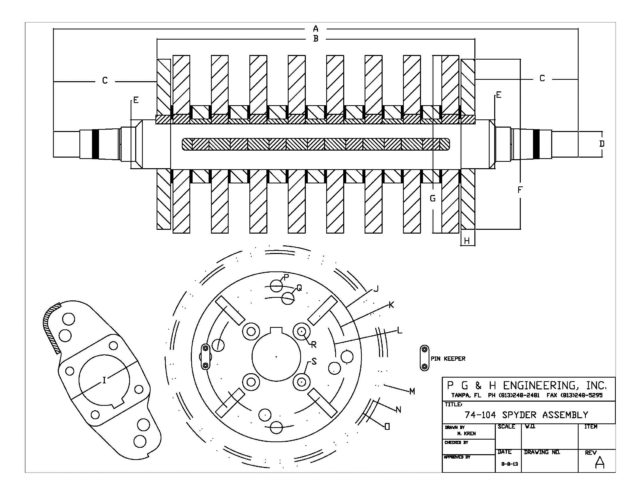
Find your rotor arrangement drawing.  The drawing shows the entire rotor and describes its major dimensions, weight, shaft size and general assembly.  With this drawing, a rotor builder understands the style and quantities needed to build a rotor.

Example Rotor Assembly Drawing (courtesy of PG&H Engineering)

They can estimate materials and general time needed, enabling them to provide you a quote.  You need to describe what it is you are buying. A picture is worth a thousand words.  Here is a rotor template drawing from PG&H if you need to make your own.

Describe your hammer and hammer pin size.  A drawing with some basic dimensions is ideal. If you don’t have one, go to our quote page and download the hammer template you need (such as bell hammer) and use it to describe your hammer.  The rotor builder needs to confirm your hammer swing radius, thickness, and pin hole size.  Provide them hammer pin diameter and length.  We have a template for hammer pins as well.

Get with your operating crew and determine the specific needs at the shredder.  Yes, you need a new rotor, but what else?  Here are the common replacement items for a rotor change out.

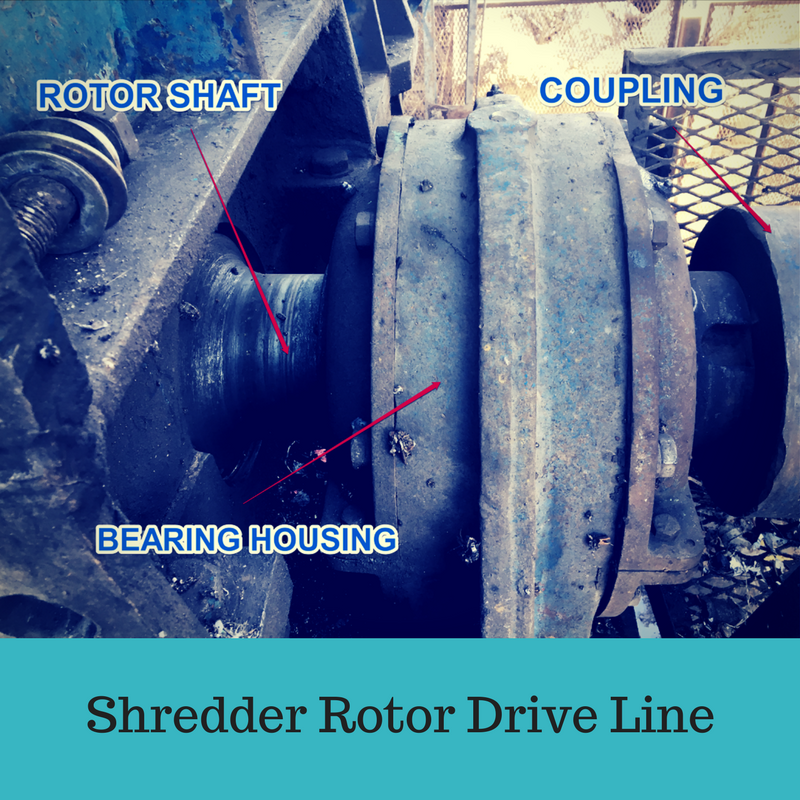
Bearing housings

These hold the bearings and attach the rotor shaft to the shredder.  They get worn and damaged as well.  If in good shape they can be renewed.
You should have a spare set on hand and can plan to use them.  If they have yet to be renewed, get them cleaned up and sent out to a shop that can build them up and machine them to restore a secure fit.

Oil seals

Seals keep the lubricant inside the bearings housings.  They are long lasting, but always replace with new during a bearing change.

Rotor bearings

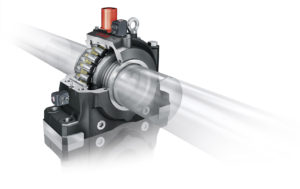
FAG Beargings by Schaeffler Group

Photo courtesy of Schaeffler / FAG Roller Bearings

Generally spherical tapered roller bearings are used.  You should have a spare set on hand.  If you need a fresh set, order early as lead times can vary by many weeks.  Be sure your spare set is well stored and free of minor rust and dirt.  Larger machines have oil cooled bearings, smaller mills may use greased bearings (not needing an oil re-circ system).

Coupling device

A means to connect the drive shaft to the rotor.  You may be able to remove the old one and reuse it, use a spare, or plan on having a new one made by your rotor shop.

Drive Shaft

You will have the rotor out, so it’s the right time to service your drive shaft.  Plan for it.

Bearing Base Plates and Shim Kit

The saddle is the mounting area on the shredder base where the bearing housing sits to anchor the rotor to the shredder itself.  These surfaces are subject to wear themselves.  The bearing housings should wear first, but in reality, both wear.  The saddles will have to be cleaned and ground flat.  The bottoms of the bearing housings will be milled flat in the shop.  A steel base plate is used when you need to make of the difference in height from the wear of these two surfaces.  A shim kit is useful for rotor alignment.  It is a set of pre-cut metal shims to help you adjust rotor height when aligning the rotor drive train.

Thermocouples and Instrument Wiring

Oil cooled bearing generally have a temperature monitoring probe on the bearing oil. Often the probes and wiring will be damaged after years of shredder service.  If they need to be replaced, plan for it now.

Bearing oil piping, hoses, fittings

Similarly, your bearing oil delivery system takes abuse over the years.  You may need to replace piping or use fresh hose.   You might want to get the bearing oil pump & reservoir cleaned and serviced during the rotor change as well.

Bearing bolts

The studs or bolts that hold down the bearings to the saddle base should generally be replaced.  Bolts are made to have a certain amount of stretch.  Once they have stretched and done their job, they don’t stretch and hold quite the same the next go around.  Its a finer point and often, the bolts or studs are often reused.  It’s best if you change them.  Often the threads and nuts get damaged, so a fresh fastening system is good.  After spending so much to  replace the  rotor, you’re are going to cut corners elsewhere in the installation?  Just saying.

You have your shopping list.  Go find yourself a rotor and replacement supplies.   Call you your Original Equipment Manufacturer or one of the replacement builders out there, such as PG&H Engineering.   Contact us if you need some advice.

December 22, 2015

The Risks of Not Staying on Top of Shredder Maintenance

Tom Stanek

Ben Guerrero has penned a story for Recycling Product News ‘The Risks of Not Staying on Top of Shredder Maintenance.’  Survival in times of low markets dictate many cut backs in shredding facilities worldwide.  When you are low on people, finding man hours to tackle even the most basic maintenance is a challenge.  Ben outlines some of the do’s and don’ts in this article.

While it may be ‘preaching to the choir’ for operators, this simple advice should be acknowledged by senior management.  Shredders and non ferrous separating systems won’t keep running without minimum maintenance.  Idled plants won’t start up or hold much resale value if they are ‘put away cold and wet.’   Deferring too much maintenance could lead to larger issues.

Some scenarios to consider, all actual incidents:

  • Failure to clean the motor air cooling system filtration leads to dirt build up in the windings.  Warmer operating days lead to high motor temps, then overheating and a motor fire.
  • The cleaning crew continues to defer cleaning the spillage that slowly builds up between the shredder and motor building.  Your inspectors miss an auto with  fuel in the tank.  Fuel runs out as the auto slides down the infeed chute, it trickles down next to that scrap pile, and there is ignition.  A fire right next to your mill machinery now needs attention.
  • Extending runs times between grate changes saves part costs.  Eventually grate holes are 30% larger than new, the distance between hammer tips and anvils is large, and cream puffs of balled up sheet drop from your stacker instead of dense shred.  Your fluff loads have more metal than you remember.  You check the last 3 months of production records and realize your non ferrous recovery has dropped noticeably.  Ferrous production is up but shipping density is down, zorba volume is down, and so is revenue.  Was it feed stock, weather, or maintenance? Compare the savings in wear parts to the revenue decline.

Grates Its About the BenjaminsWhat’s the best balance? The answer is different for each plant.  Safety and environmental compliance are non-negotiable operating absolutes.  Operating maintenance is not too far behind.  Ideally it’s all the same mindset at your facility, and peak performance and efficiency continue to be the goal of all team members.  Yes, there must be rational tradeoffs between budget, readiness, and acceptable downtime.  Plan in advance to be ready for seasonal or market upticks in volume.  Be sure your facility stands ready to execute for a return to higher production when opportunity arrives.

Find Ben’s article Recycling Product News – Ben Guerrero.

November 17, 2015

Economic Impact of Recycling

Tom Stanek

Our recycling customers make a significant contribution to our economy as well as sustainability. The industry recycled 135 million metric tons of materials in 2014. The material was diverted from landfills to produce new products, reducing the need to mine or harvest new resources, with less energy expended during the process.  Recycled Materials

The Institute for Scrap Recycling Industries summarized the economic benefit of this activity in a 2015 study. The industry supports 470,000 plus jobs and generates $105 billion in economic activity. This includes downstream suppliers such as auto wrecking yards, independent scrappers, and firms that provide equipment and services to the industry.
Recycling contributes about 0.68% of the national economic activity and generates about $11 billion in federal, state, and local taxes annually. Recycling helps the US trade balance with exports to over 160 countries valued at nearly $21 billion in 2014.
ISRI summarized the report in this short video.


June 16, 2015

ISRI Safety Stand Down Day June 24th

Tom Stanek

Scrap Recyclers are encouraged to join the Institute of Scrap Recycling Industries (ISRI) industry wide Safety Stand Down Day on June 24, 2015.

All ISRI members are asked to recognize Safety Stand-Down Day by shutting down operations for at least one hour on every shift to engage in safety awareness training. Demonstrate to your workforce that safety is your number one core value and that you consider your workers to be the most important asset of your operation. Each Monday in June leading up to Safety Stand-Down Day,

safetystanddown-775x110

See the ISRI web site for useful resources to use as part of your training. These guides will focus on five topics: mobile equipment, lockout/tagout, confined spaces, machine guarding, and fall protection.


March 3, 2015

International Shipping Available

Tom Stanek

Shredding scrap is a tough business  …wherever you are.  Quality wear parts are a common need whether you are in a big city, small country, up over, or down under.  That’s why international shipping is available from K2 Castings.  We handle door delivery in the USA, Canada, UK, Australia, and much of the EU.  We also deliver to the major container port of your choice.

We work to be part of your wear parts options.  Most importantly, we work to be part of your shredding success.  Contact us for a quote today.

we ship internationally

January 8, 2015

How Many Ships At Sea?

Tom Stanek

The United States is the leading exporter of scrap metals in the world.  Barges leave the inland river system to get loaded in on ships at NOLA, tens of thousands of containers are loaded with recycled metals each day, and bulk ships of shred and HMS depart our ports.  That’s a lot of cargo.

How many ships are there at sea?  80,500 on the seas Jan 7, 2015.


snapshot of ships at sea on Jan 7, 2015.  image courtesy of MartinTraffic.om

snapshot of ships at sea on Jan 7, 2015. image courtesy of MartinTraffic.om

The number is for all types of commercial vessels, not just scrap carriers.  That a lot of traffic.  The information is provided by MarineTraffic.com.

November 19, 2014

What is the Impact of the Recycling Industry?

Tom Stanek

NET EXPORT BENEFITS TO USA IN 213Recycling may seem like a recent trend to many, but it’s been going on in the United States for over 200 years.  Part of the industry lore is a story the Continental Congress had to also buy scrap to help supply materials for the purchase of muskets for the young nation.  I wish we had that document around for verification.  I’d like to see the names on it.  Patriot Iron & Metal or Revere & Sons maybe?

Today, all recycling industries play a vital role in our economy.  The Institute of Scrap Recycling Industries (ISRI) put together some numbers for 2013.

  • 130 metric tons of materials were recycled in 2013
  • These products represent $87 billion in economic impact to the nation
  • 140,000 people are employed in recycling nationwide
  • As a net exporter of recycled materials, the nation’s trade balance was improved by $24 billion dollars
  • Recycled materials use less energy than virgin materials, helping curb greenhouse gas emissions and promoting sustainability

Here is a short video by ISRI introducing the industry impact in the USA.

October 28, 2014

It’s All About the Benjamins: Why Worn Shredder Grates Reduce Your Revenue

Tom Stanek

My colleague Ben chuckles when I summarize his lessons by saying “It’s all about the Benjamins, isn’t it.” He laughs, but it’s true — often we lose sight of our goals in different metrics, philosophies, and competing perspectives.

Grates Its About the Benjamins

However, if we think about the goals in terms of money, sometimes things get clearer.

Similarly operators get stuck in a rut and unwittingly shift focus on their shredding goals. These days, cost reduction is a major concern for every company shredding scrap. We’re all doing more with fewer people, stretching maintenance periods, and looking for the most competitive price.

With all the metrics, reports, cost reduction goals, competing priorities of the times, it can change your operating focus. And change how you view shredder wear parts.

Ben has visited a several operations, obviously well run and maintained. They all had their preference for a certain bottom grate and revealed they’ve been able to push the grate well beyond recommended life, saving them money.

Just because you can run a set of grates an extra long -time, doesn’t mean that you should. The loss in shred density and non ferrous liberation may be greater than the cost of replacing the grates on schedule. While saving on wear part costs and reaching your cost reduction targets, are you throwing away profitable zorba & zurich non-ferrous recovery in the process?

We see it as stepping over a dollar to pick up a dime. What does the money say?
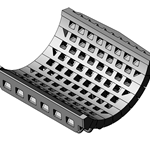
k2-recovery-grates

K2 RecoveryGrates

Excessively worn grates do not reduce and liberate as well as fresh parts in the shredder box. As you approach the end of grate life, you’ll find grate hole size increases and the distance from hammer tip to grate face increases.

You’ll also see the distance from anvil or cutter bar to the hammer tip open up, reducing effectiveness. When shred density diminishes, so does the recovery rate in your downstream separation system.

Your steel mill consumer doesn’t like the poor shred density, cleanliness, or copper content worn grates yield. Your eddy currents and induction sorters have a tougher time pulling out materials, if they are making it to the separation plant at all. Non-ferrous metal units are lost to your ferrous pile or waste stream.

If worn grates cut your recovery even a 0.5%, what does that mean to the money?

Let’s use very conservative numbers. Running 10,000 GT per month, an economizer stretches his grate change from 65,000 GT to 95,000 GT. He paid $50,000 for the grate set. At 6.5 months to recommended change, his cost is $7692 per month for grates. He went an extra 3 months, so let’s say his grate cost is zero during the 3 months of extended use. In other words, he saved $7692 per month for 3 out of 9.5 months.

Let’s conservatively say once the grates hit normal life, they yield just 0.5% less non-ferrous recovery. The grate holes open up, the clearances inside increase, the hammers tend to drag over the scrap a bit, and cream puffs of tin start dropping off the undermill oscillator.  Recovery is often expressed as pounds of metals per shredded ton of ferrous output.  We’ll use a common baseline of 100 lbs per output ton.

Again, conservatively lets use a drop from 4% to 3.5% non ferrous per shredded ton. It’s likely much higher than that.  Non ferrous units go down from 100 to 95 pounds per shredded ton.  We’ll let you do the final step to find the money, taking your average price per pound for recovered shredded  metals. We’ll just look at the quantity.

  • Worn grates loss is 0.5% per shredded ton
  • 10,000 GT x 100 lbs/shredded ton = 1,000,000 lbs per month
  • 10,000 GT x 95 lbs/shredded ton = 950,000 lbs per month

During that 3 month run, non-ferrous revenue dropped by 50,000 pounds per month for a 3 month total of 150,000 pounds. Convert that to the sales revenue yourself.  3 or 4 containers of shredder metals is lot more than $23,100.

  • The delayed grate change saved $7700 per month for 3 months, or $23,100
  • Loss in non ferrous metal units 50,000 lbs per month, 150,000 lbs for 3 months

Why are we shredding?

Everyone can trim costs each month and do with a little less. But looking at the money gives us a fresh perspective at how we set those interim goals.

At the request of our best customers, we designed in wear indicators to our K2 RecoveryGrates. We just listened to their feedback, “When when the grate is done, we want to know quickly.”

No stepping over dollars to pick up dimes. RECOVERYGRATES
Want more non-ferrous recovery from your feed stock? Our K2 RecoveryGrates can help you get more from what you already have. Need a better non-ferrous recovery system? Give us a call on helping you find the right solutions for your capital budget. It’s all about the Benjamin’s!