Blog

December 17, 2025

L-I Battery Fires in Scrap Yards: Mitigating Risk, Contamination
Tom Stanek
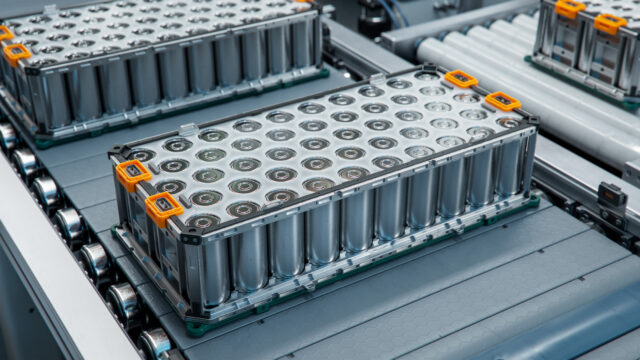
Lithium-ion High-voltage Battery

Lithium-ion battery component for an electric vehicle.

Lithium Ion (L-I) batteries now exist in many items we all use, from mobile devices to e-scooters, bikes, and electric vehicles. The main concern with L-I batteries is fire risk, with residences, vehicles and businesses catching fire.

When L-I batteries enter waste streams and remain undetected, they can cause huge fires at landfills and recycling plants — putting yard personnel and the surrounding community at risk due to the release of toxic gasses from the batteries.

The challenge is that most consumers “are not aware of the safety, fire, and insurance risks posed by improperly manufactured, charged, stored, damaged or discarded rechargeable batteries and battery-containing devices, particularly lithium-ion batteries,” ReMA stated in its February 27, 2025 position paper, ReMA Position on Non-Embedded Small and Medium Format End-of-Life Battery Management.

L-I battery fires behave differently and require different suppression methods. The problem isn’t the fire per se — it’s the chemical release. Randy Narine, an active fire fighter, and CEO of Clean Core Research, shared his insights in an interview with Recycling Product News (source).

“This is the biggest education point that I’m trying to get out there,” says Narine. “The fire is one piece. The structure collapse is another. The biggest concern for me is the actual chemical release; identifying what’s been exposed, cleaning it up, and mitigating that risk.”

His concern extends well beyond scrap yards. A CBS News report about L-I fires interviewed a homeowner who lost his house to a L-I fire — the battery was in the vacuum cleaner, which had been left on the charger too long. His children, who were alone in the house, safely escaped; his two cats did not.

In another incident, a mobile phone caught fire on a plane mid-flight, filling the cabin with smoke. L-I fires burn hotter and spew toxins. In the video, you can see people on the flight holding tissues to their noses in order to breathe.

The toxic chemicals can contaminate anything they come into contact with, such as the wiring and electronics critical to the aircraft’s function.

Narine’s Toronto, Canada company conducted an investigation following a lithium battery fire in a residential setting. Although the fire was extinguished quickly, within days the home began showing signs of corrosion, including degraded outlets, rusted tools, and the HVAC system testing positive for chemical contamination.

This same kind of hidden damage, Narine says, “can occur in scrapyards and MRFs. The byproducts create some serious oxidation. It will rust metal at an astronomical rate.”

Scrapyard owners: Take proactive steps

The first step is risk assessment. As ReMA states in its position paper, an L-I battery in your scrap pile isn’t a what-if; it’s a given. If a fire were to start in your yard, who or what is at risk? While the safety of workers is your primary concern, what critical infrastructure could be damaged due to contamination or oxidation?

Narine recommends developing and adhering to proper handling and storage of L-I batteries to prevent unintentional fires that could shut you down.

Second, make a plan. Consult with your local fire officials to understand their approach to L-I fires and hazardous gas containment versus simply extinguishing the fire. If a fire were to occur, ensure you have a plan for safe evacuation of all yard personnel and quickly notifying first responders.

Your plan should also include post-fire testing, clean up, long-term response. The huge problem with L-I fires is the long-term contamination to surrounding structures and equipment, the soil, and even the PPE worn by yard personnel.

Keep abreast of state and Federal regulations and updates regarding L-I batteries

According to ReMA, states are considering end-of-life battery management legislation for small, medium, and large format batteries, and battery-embedded devices.

At the end of 2024, New Hampshire’s then Governor Sununu signed legislation, to take effect July 2025, that bans lithium-ion batteries and some electronic waste from disposal at New Hampshire landfills and incinerators, stemming a serious fire hazard. (source)

The key, however, is public awareness and education. While NH’s new law “requires owners and operators of disposal facilities to take steps to prevent the disposal of the batteries and electronics,” preventing disposal in the first place is difficult — especially since recycling opportunities are still difficult to locate in many states.
December 10, 2025

The Future of Post-Burn Municipal Shred from Waste-to-Energy Plants

Adam Rosenthal
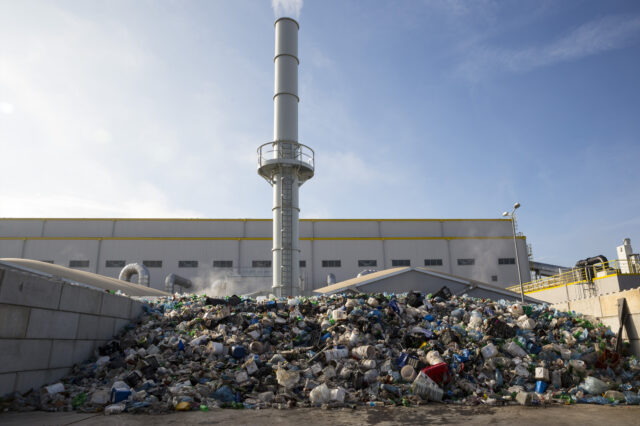
waste-to-energy facility

WTE facilities incinerate collected municipal refuse to produce electricity; they also recover ferrous and non-ferrous recyclable scrap.

Each year, Waste-to-Energy (WTE) plants along the East Coast generate over 500,000 gross tons of post-burn municipal ferrous scrap. These facilities incinerate collected municipal refuse to produce electricity, which is sold back to local power grids.

During incineration, both ferrous and non-ferrous metals are recovered from the waste stream, sorted, processed, and sold as recyclable scrap. WTE scrap is a secondary grade due to contamination and density. How can WTE operators improve their quality and revenue opportunities?

Continue reading »

October 23, 2025

Hidden Fire Hazards in Scrap: Uncommon Sources of Lithium-Ion Batteries

Gareth Cayten
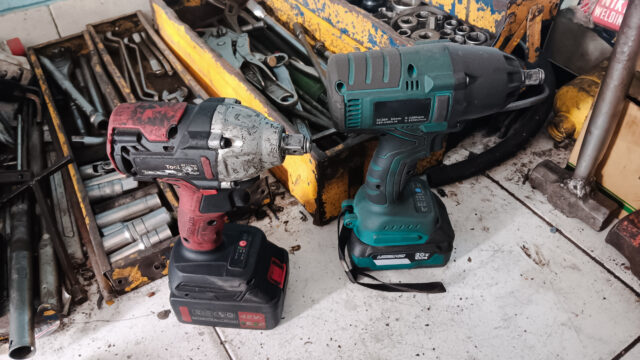
powertool battery pack

Cordless power tools are convenient but battery packs present a fire hazard for scrap yard owners.

Lithium-ion batteries are one of the most persistent fire risks in scrapyards. Most operators are well aware of the common culprits: laptops, cell phones, and power tools. But just as often, batteries show up tucked inside less obvious items and when they get missed, they can end up in your shred pile, waiting to ignite.

Some of these items are small and hidden. For example, electronic toothbrushes, vape pens, and wireless earbuds all contain lithium cells, but their small size makes them easy to overlook. Even everyday greeting cards with built-in music or lights can hide a thin lithium battery that can ignite when punctured.

Continue reading »

October 13, 2025

Aurubis Opens New Smelter in Augusta, GA

Tom Stanek
aurubis-smelter

Screenshot from Aurubis Richmond company video

Aurubis AG, one of the largest copper recyclers worldwide, announced the opening of its Aurubis Richmond (Augusta, GA) facility September 24, 2025.

According to the company press release, it’s the first U.S. multimetal recycling and smelter plant of its kind. The facility, already in operation, is producing key strategic metals such as copper, nickel, tin, and precious metals, for American manufacturers.

Naveed Moghadam, Commercial Director at Aurubis, stated at ReMA’s September 2025 Copper Roundtable that the company wants to be a first mover against its competition.

“We see the U.S. as a key and growing market where development is happening,” Moghadam said. “We invested in the site because we wanted to be one of the first players to support manufacturing being reshored to North America.”

Continue reading »

August 19, 2025

15 Yard Batch Feeder Available

Tom Stanek

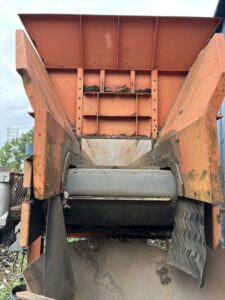
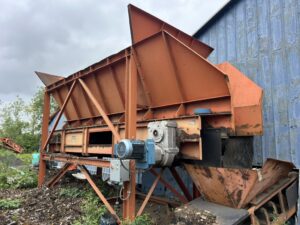
We have a customer with a 15 yard batch feeder available.  This large capacity, slow speed conveyor is suitable to slowly feed fluff/ASR or bulky material into any processing line.  Drive motor is 15 HP.  

$40,000 available for immediate shipment.

Batch feeder

August 19, 2025

For Sale: General Electric Gas Turbine Model MS5001 PA DLN & 30 MW Generator

Tom Stanek

One of our customers is selling a 30 MW gas turbine power generator that has become excess equipment.

UPDATE 11/11/2025 this unit has been sold

Continue reading »

July 23, 2025

Considerations for Adding Solar to Unused Land at Your Recycling Facility

Tom Stanek

solar-panels

One question we’re asked repeatedly by yard owners or managers: Should they consider adding solar to unused land attached to their yard. By solar, people mean the panel installations you see tucked into small unused plots of land that abut roads, interstates, and farms. Solar installations can also be found on capped landfills.

Adding a solar installation sounds good. Similar to adding solar panels to your home’s roof, the upside means you pay less for electricity and can charge your EV, should you own one. It also means you can store what you don’t use or sell your electricity to the local utility. Win-win-win.

But, installing solar on unused land in your recycling yard involves several considerations, including the acreage you have available, if it’s suitable for an installation, and if the ROI is greater than the start-up costs and ongoing maintenance.

Most important is your location. If you live in the Northeast, you’ll have to contend with shorter days in winter, snow, clouds, etc. Or, you live in a state that (so far) has few solar installations but could use the energy yours would generate.

Continue reading »

May 15, 2025

ReMA 2023 Yearbook Provides Detailed Overview of Metal Recycling Industry

Tom Stanek

ReMA Yearbook 2023 Cover

In case you missed it, ReMA published its 2023 Yearbook in February 2024 (download the PDF). The Yearbook replaced the ISRI Factbook, which we relied on to provide vital statistics about our industry, including the major importing and exporting countries for steel and iron, aluminum, copper, and stainless.

After considerable research by our team, we discovered current data for metal recycling is difficult to find and assemble; official U.S. data points are through the end of 2023.

The Yearbook, therefore, provides a good overview of the industry — with the caveat that things are rapidly changing.

For up-to-date news, we recommend visiting the ReMA website — members can log in to view trade and other info. We also recommend reading industry journals, such as Metals Recycling. Hopefully, ReMA will publish its 2024 Yearbook within the next couple of months.

The data presented by ReMA provides many positive signs and trends for our industry. All stats listed below are end of 2022 unless otherwise noted.

Continue reading »

March 17, 2025

How Do I Know If I Need a New Shredder Rotor?

Tom Stanek

shredder rotor

“I just took over an aging shredder. How do I determine if I need a new rotor and how much life is left in it?”

Good question! First, compare the original condition to the current condition. Try to find the rotor arrangement drawing, which came with the shredder when it was new or when the replacement rotor was purchased. This drawing should show disk thickness and key dimensions.

✔️ Check that the tie rods are still holding the rotor tightly together
Measure the outside-outside end disk distance across the rotor. If it’s growing an inch or more, the spread can mean loose or broken tie rods or loose or missing end disk nuts. A loose rotor will have limited life.

✔️ Look at rotor disk thickness and edge wear
Monitor the disks diameter indirectly, by tracking the distance between hammer pin hole and edge of the disk.

✔️ Monitor disk thickness and “wash out” around the hammer swinging area about the pin hole.

✔️ Check bearing bolts for tightness and bearing housings for damage
Clean up debris and keep bearing areas clear.

Continue reading »

March 14, 2025

Hagglunds MA283 Hydraulic Drive Motor for Sale

Tom Stanek

We have a Hagglunds Marathon MA283 drive motor available for sale.  The rebuilt unit is packed and in storage.

The Hagglunds MA 283 N 04 00
Serial number: 513 00904
It is set to receive a shrink fit coupling.
$25,350 fob Boston MA.