Blog

July 31, 2010

Hammer Patterns – Which is Right for You?

Tom Stanek

There are hammer patterns to fit every type rotor and feedstock situation.  The goal is to get effective production levels while extending the life of your wear parts. Shredder hammer patterns can play a key role in accomplishing these goals.

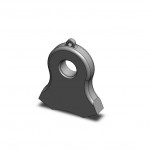
Spider rotors can have anywhere from 26 to 30 plus hammer positions. Although there are this many potential positions, in the majority of applications it is best in terms of performance and reduced wear parts cost, to use fewer hammers to achieve your goal.  There are not many patterns for a typical 4 arm spider rotor. You can reduce wear parts costs by dropping the number working hammers, using worn out hammers or pin protectors in the dropped positions.  Start, with 2, then 4, dropped working hammers and look at tons per hour and separation.
Reducing the hammer count in a spider rotor has produced mixed results.  Some machines achieved notable production gains, but often produced less dense scrap.  A density change indicates other factors were likely involved that were not controlled or noted.  Maintain grate size, monitor shred density and non ferrous recovery rates to be sure where your gains come from.   Finding your ‘sweet spot” requires a little experimentation and measurement.  If you can maintain density and recovery and use less new hammers, you’re moving in the right direction.  Whatever your combination of working hammers, be sure to weigh and balance your rows.  Spider rotors demand it.

Next time, disk rotors.

June 21, 2010

Fire Prevention for Scrap Recyclers

Tom Stanek

FIRE PREVENTION

Summer is here and the possibilities of a fire in your scrap feed stock and fluff piles go up substantially. No one wants to get that call in the middle of the night that your yard is on fire.  Manage your operation to minimize risks at your shredder.

Some precautions to take:

  1. Keep your scrap piles at least twenty feed away from all processing equipment. Infeed conveyors, loaders, cranes, etc.
  2. Don’t accumulate large feed stock piles.  Process it.  If you are down for an extended period of time for maintenance, add fire break gaps to segregate large feed stock piles.
  3. Make sure your fire control systems are in place. Hoses and nozzles are in good condition. All fire extinguishers checked monthly. Discharged extinguishers moved to used tank area for refilling.
  4. Make sure there are no trash piles in the yard. Old pallets, Gaylord boxes etc. These all should be disposed of properly on a regular basis.
  5. Re-educate your inspectors to watch for hazardous materials which can start a fire. Batteries, gas tanks, propane bottles, all other flammable tanks.
  6. Make sure all shreds have been run off the conveyor belts and wet down the conveyors belts and area around the shredder. Especially over a long holiday weekend.
  7. Lastly, have a supervisor walk around the processing area to insure there are no hot spots. Make a person in each area also responsible to inspect the areas.
  8. Enforce after hours yard security.   Security needs to make night rounds of process areas.  Also, many fires are also intentionally set after hours by “unauthorized” visitors.

Have a safe production summer!!

May 3, 2010

Weld on Teeth for Your Feeder

Tom Stanek

K2 Castings’ wear parts line includes weld on teeth for your scrap metal shredder’s double feed roll (DFR). 

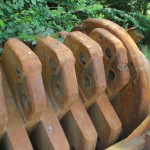
Maintain a good tooth profile on your DFR rolls to keep your feeder effective and productivity up.  Bars and AR Plate teeth work fine, but the edges wear down faster than you’d like.  Our weld on teeth provide a strong stable profile.  Once welded in place, you can add easily replaceable standard square stock to the tip so you can maintain sharp edges. 

The profile and edges keep tin and logs moving in, and help hold auto bodies and long stock for a controlled feed into your shredder. Try our DFR teeth. You’ll notice the difference. Contact us today.