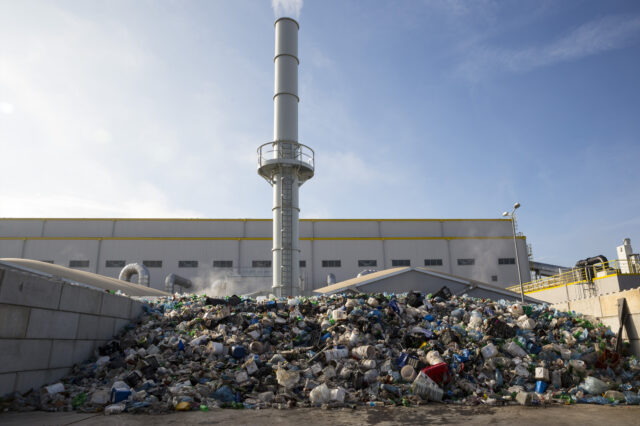
WTE facilities incinerate collected municipal refuse to produce electricity; they also recover ferrous and non-ferrous recyclable scrap.
Each year, Waste-to-Energy (WTE) plants along the East Coast generate over 500,000 gross tons of post-burn municipal ferrous scrap. These facilities incinerate collected municipal refuse to produce electricity, which is sold back to local power grids.
During incineration, both ferrous and non-ferrous metals are recovered from the waste stream, sorted, processed, and sold as recyclable scrap. WTE scrap is a secondary grade due to contamination and density. How can WTE operators improve their quality and revenue opportunities?
The incineration process
WTE plants burn commingled waste materials including paper, wood, plastic, ferrous and non-ferrous metals, dirt, rock, food waste, packaging, small appliances, electronics, and glass. During incineration, non-ferrous metals such as lead, tin, zinc, copper, and aluminum — which have lower melting points than ferrous steel and iron — melt and combine with ash and ferrous materials. These elements are known as “residuals” and contaminants; the steelmaking industry wants to minimize both.
After incineration, the combusted material is quenched with water. During this cooling process, the liquified non-ferrous metals and ash become caked onto the ferrous metals, creating stubborn coatings. The cooled, coated ferrous metals are then magnetically separated from the ash, producing what is known as post-burn municipal scrap, or “post-burn muni.”
Challenges with post-burn municipal scrap
Household municipal scrap consists primarily of thin, lightweight sheet materials, resulting in lower-density shredded scrap grades. Because of their light density and residual coatings (primarily copper and lead), post-burn municipal scrap can only be used in limited quantities during steelmaking. The central challenge is finding a steady market for this abundant but low-grade steel product.
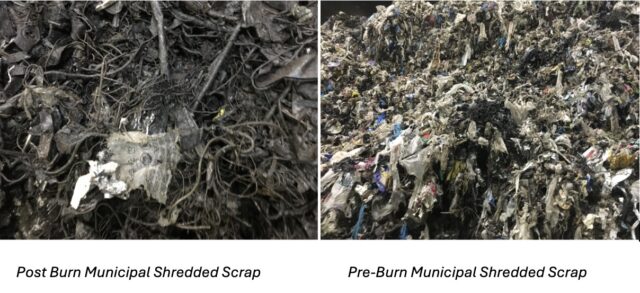
Currently, most post-burn muni is sold as low-value unprocessed shredder feed, or light iron, to ferrous scrap shredders, who process it into REMA grade 210 or 211 shred for remelting into new steel. However, shredders mix this material sparingly into their feedstock to prevent excessive chemical residuals (copper and lead). Selling muni as a feedstock to the more advanced shredders for extra processing and blending caps the value of the muni shred commodity.
An innovative processing solution
Recently, a WTE plant owner invested millions in a specialized shredding operation designed to more effectively remove adhered ash from post-burn ferrous scrap. This system includes:
- Shaker screen system
- Hammermill-style shredder
- Air stream extraction system
- High-end drum magnets
- Eddy current non-ferrous separation systems
- Classifiers
This advanced processing produces a much cleaner grade of post-burn ferrous muni shred, which can be blended in higher percentages with conventional REMA 210/211 shred products.
The path forward
The critical question is whether this new process can produce post-burn muni shred with residual copper and lead levels low enough for direct consumption by steel mills. Several strategies could improve the product quality:
- Enhanced ash removal: Smaller shredder grates or ball mill processing could further densify the output and reduce contaminants.
- Dilution strategy: Mixing in clean shredder feedstock such as white goods (appliances) and #2 HMS with the post-burn feed could dilute the higher chemical residual levels.
Steel mill melt tests are essential to determine whether this improved grade of post-burn muni shred meets specifications for direct mill consumption. These tests will decide whether this innovation can transform a low-value byproduct into a viable steelmaking feedstock.
Steel mills could gain a new supply of cost-effective scrap while muni plants gain extra value in their upgrade efforts.